The Collections
Origins
The Golden Cloak o Kamehameha
on display at the
Four Seasons Hualalai
‘Ahu‘ula o Papaiahiahi
on display at the
Kahala Hotel & Resort
‘Ahu‘ula o Kekūhaupi‘o
on display at the
Hawai‘i Convention Center
‘Ahu‘ula o Kīwala'ō
on display at the
Alohilani Resort
Linking Past and Future

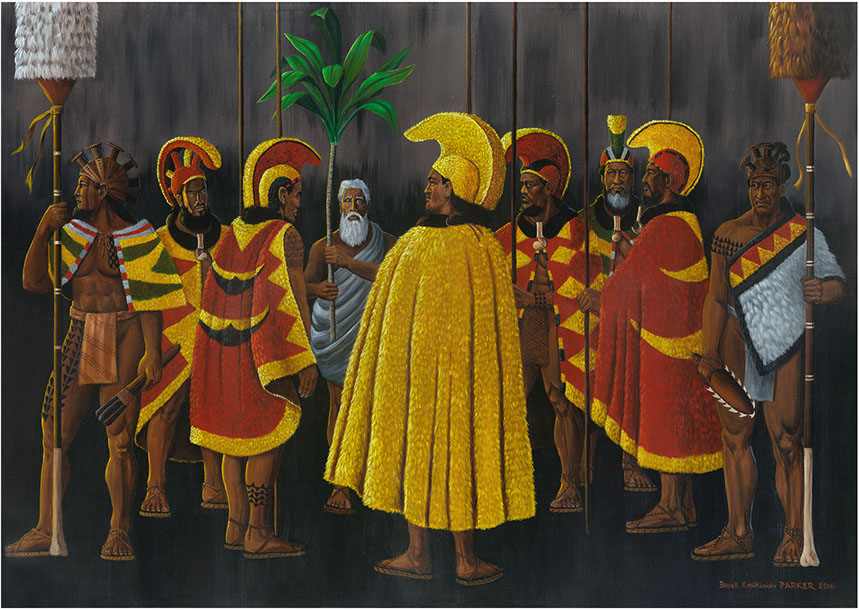
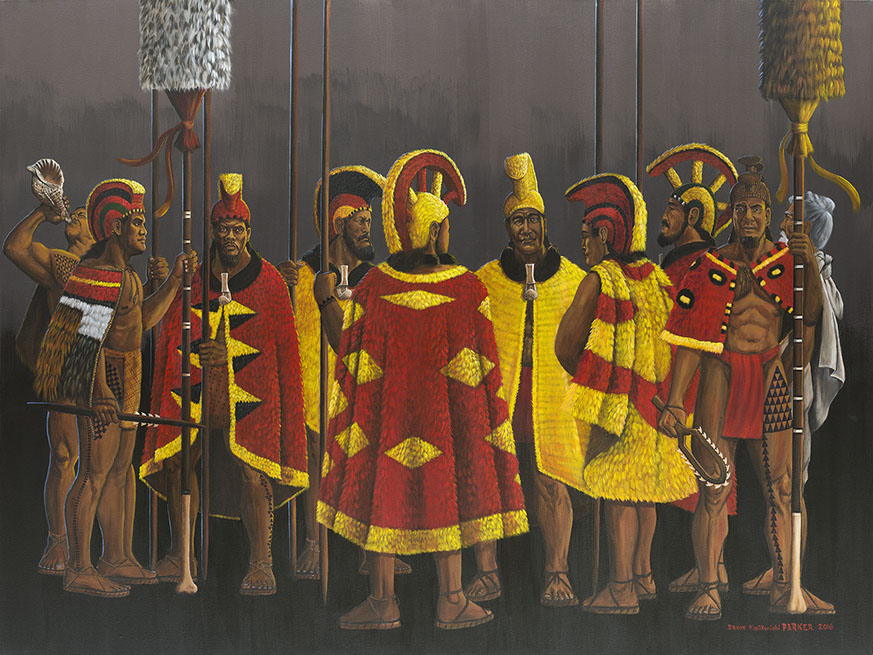
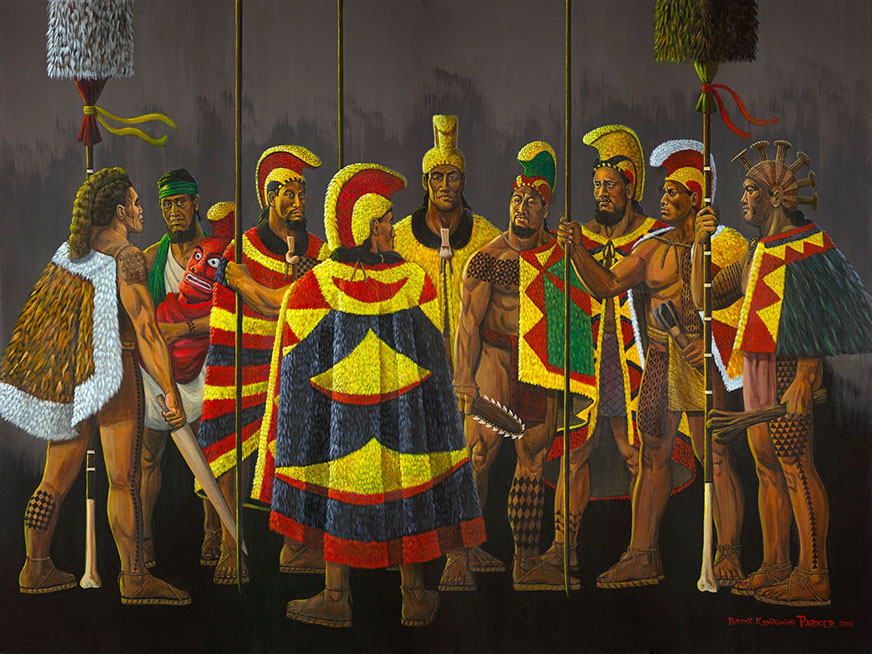
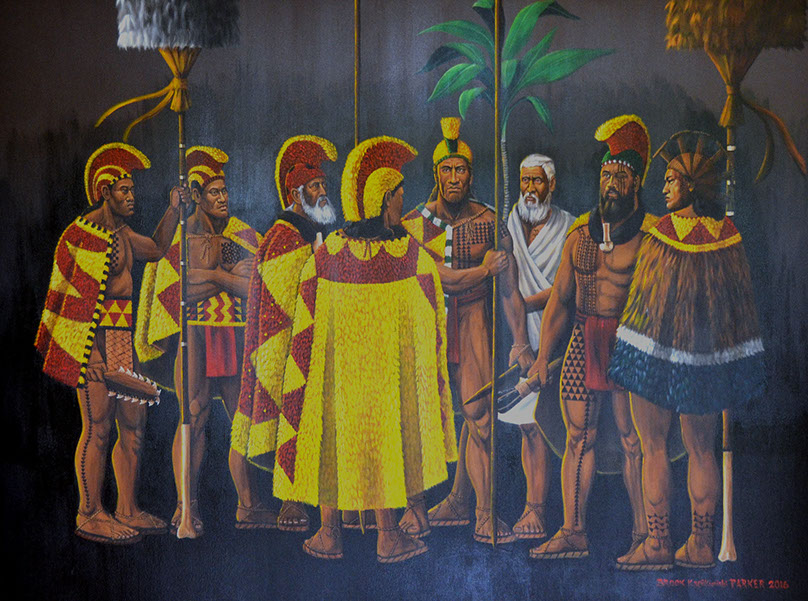
“Aha‘ula o Kamehameha Kunuiākea”
by Brook Kapukuniahi Parker
Click on image to see the painting in full resolution
In Hawaii, feathered garments denoted status and as such could be worn only by the elite. The 'ahu'ula (cape) and mahiole (helmets) were worn by the most powerful chiefs, or ali'i, and were sometimes given as gifts.
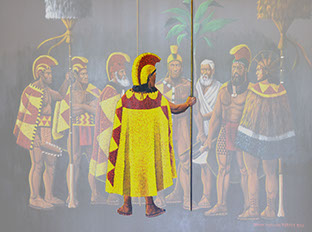
In 2013 work began on a series of 14 capes, representing each of the Hawaiian leaders depicted in the painting “Aha‘ula o Kamehameha Kunuiākea” by Brook Kapukuniahi Parker, an artist and Hawaiian historian.
These intricate pieces are being created by renowned Hawaiian featherwork artist Rick San Nicolas. Both San Nicolas and Parker are direct descendants of King Kamehameha. The artworks were commissioned by the Hawaiian Legacy Reforestation Initiative.
“I sought advisement from experts at the Bernice Pauahi Bishop Museum in Honolulu when starting the collection. It is such an honor to work on this project, and it represents a critical continuation of Hawaiian featherwork. Few, if any, other modern pieces of this type are available to the public, and it is estimated in historic accounts that there are less than 30 ancient Hawaiian featherwork cloaks in existence worldwide.”
“The reforestation efforts spearheaded by HLH and HLRI have re-established critical habitat for many of these endemic Hawaiian species, some of which are endangered,” said Jeff Dunster, HLRI President. “This ongoing featherwork collection provides an important link between Hawaiian history and our efforts to preserve these rare forests for future generations.”
The Golden Cloak o Kamehameha
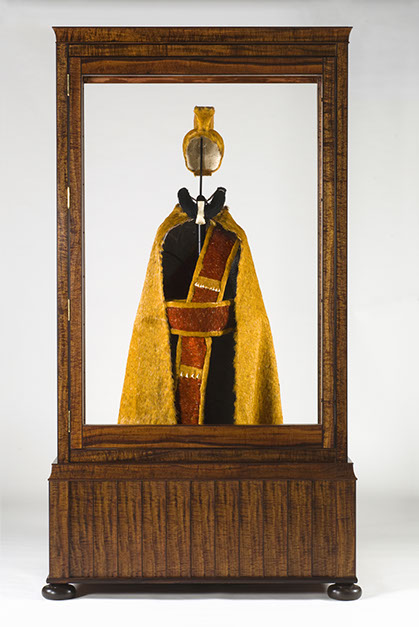
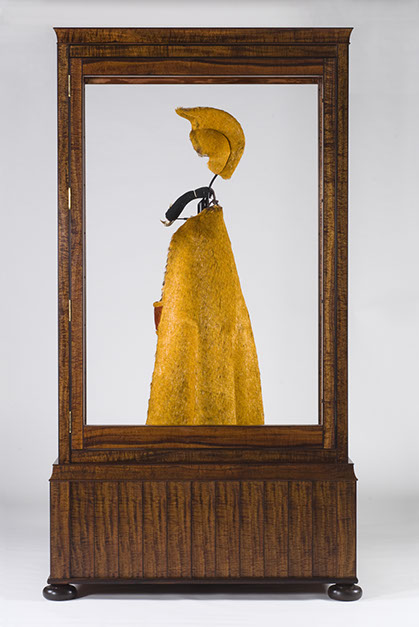
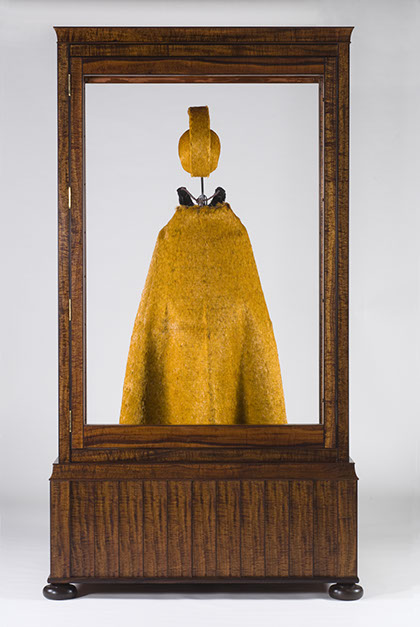
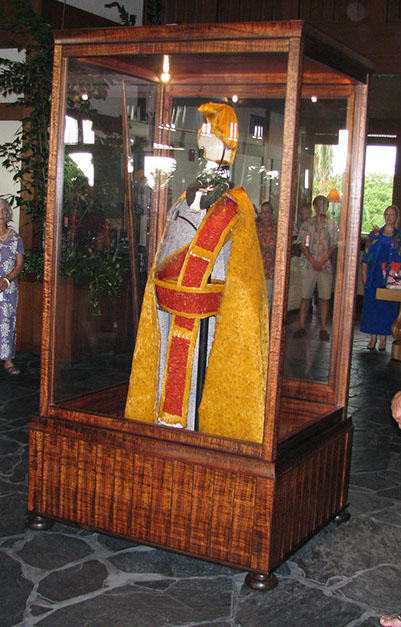
In 2013 Hawaiian Legacy Reforestation Initiative commissioned the first collection of featherwork art reproductions; a cape, sash and helmet worn by King Kamehameha I.
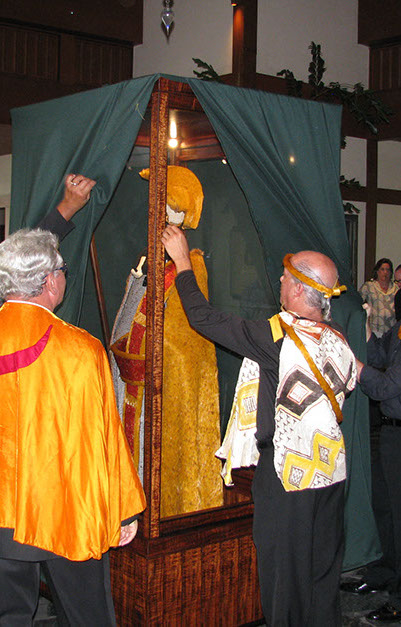
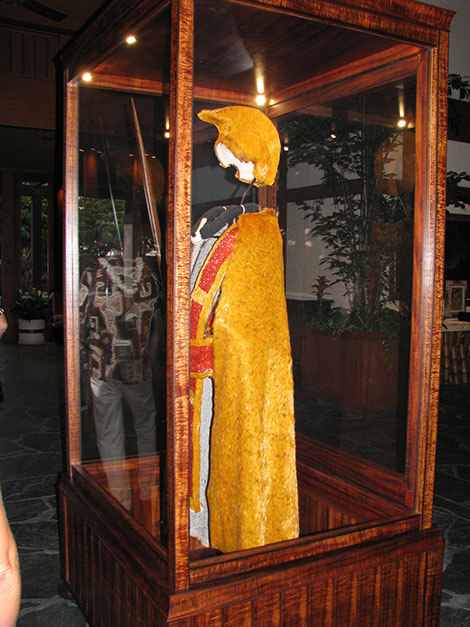
The pieces were dedicated in a private ceremony and blessing at the Four Seasons Resort Hualalai on Hawaii Island, where they will remain on display in a custom created koa wood case by award winning wood artisan Alan Wilkinson, along with a rare uhiuhi wood spear crafted by traditional Hawaiian weapon maker Manny Mattos.
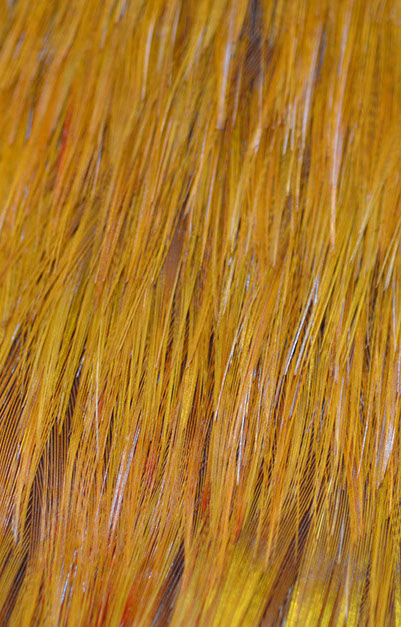
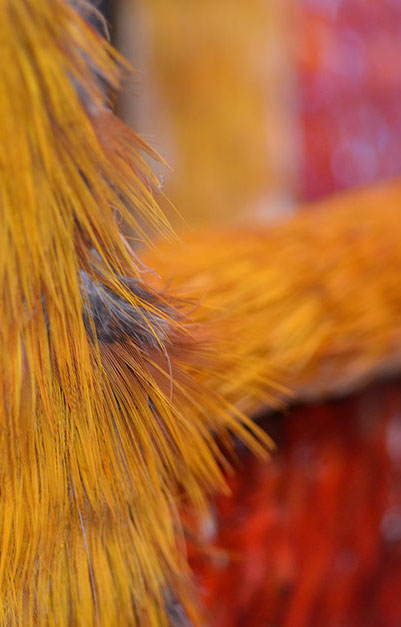
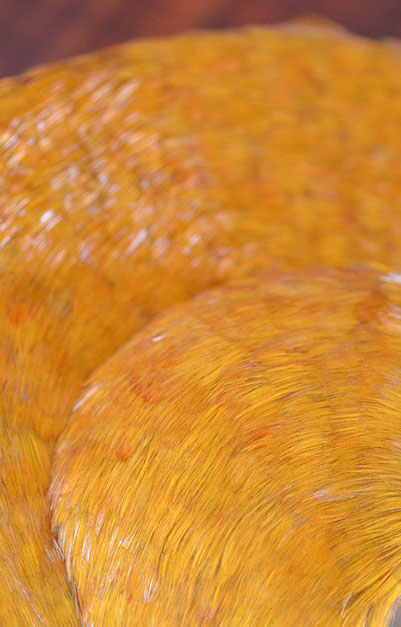
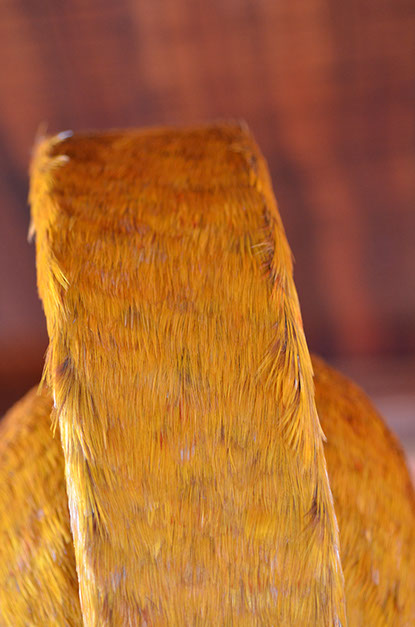
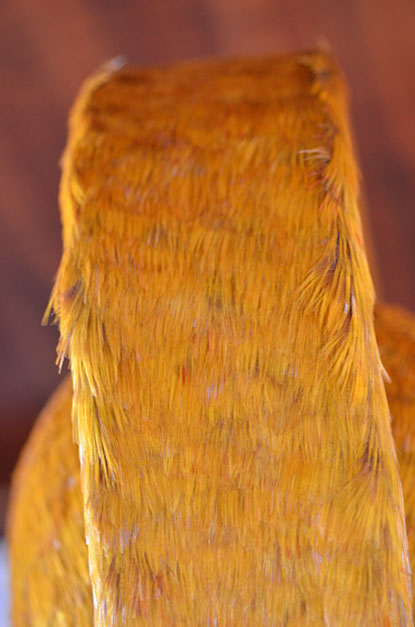
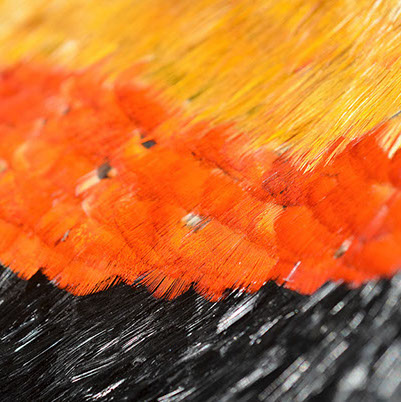
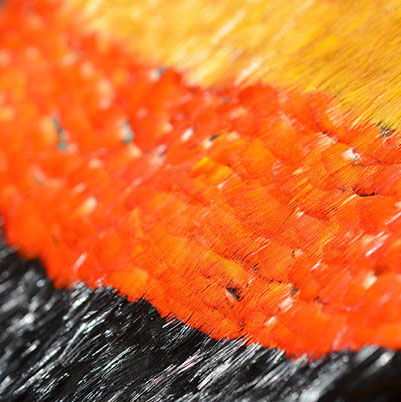
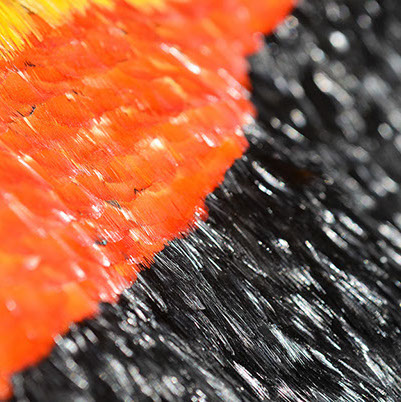
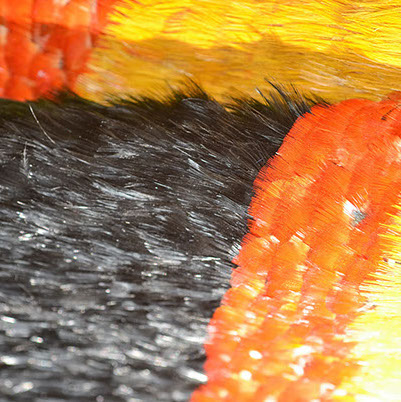
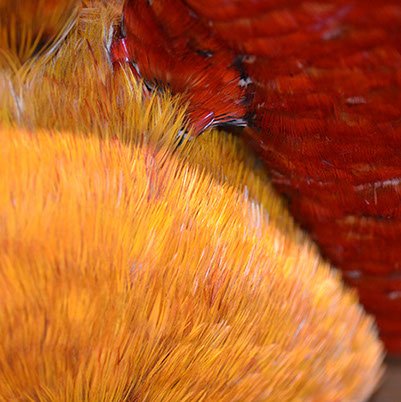
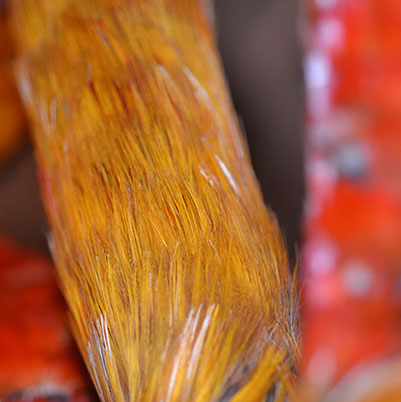
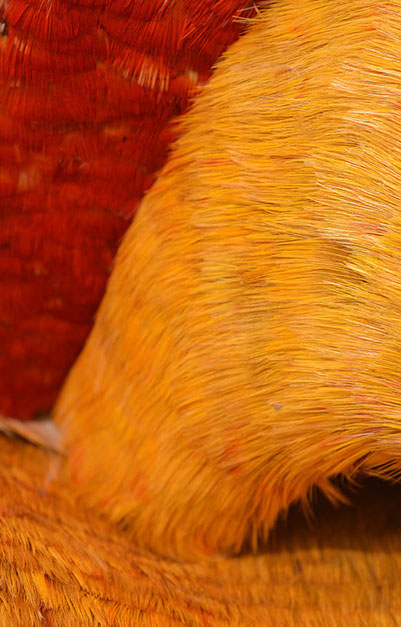
The cape, which measure 60 inches in length, uses nearly a quarter million individual golden breast feathers from Chinese golden pheasants. The sash, which is nearly 12 feet long and six inches wide, is feathered on both sides featuring the reddish-orange feathers of the Lady Amherst pheasant in addition to those of the golden pheasant. The hand-woven helmet is made entirely of golden pheasant feathers.
“This three piece collection represents more than 4,500 hours of work, including the help of a master weaver and a small team of assistants in preparing the feathers,” said artist Rick San Nicolas.


<
>
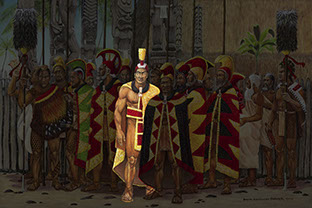
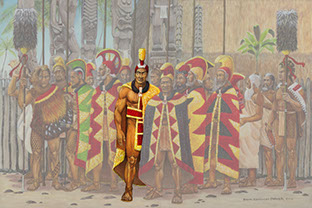
See the Golden Cloak o Kamehameha on display at the Four Seasons Resort at Hualalai
.jpg?crc=219782071)
Witness the creation of the cloak in this time-lapse video
‘Ahu‘ula o Papaiahiahi
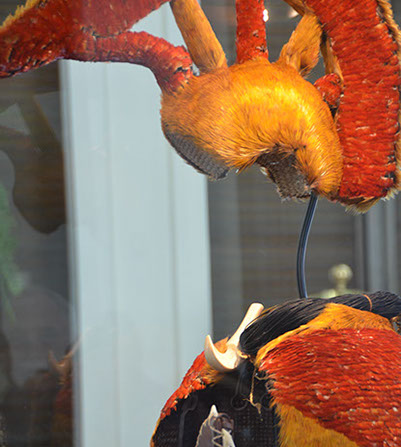
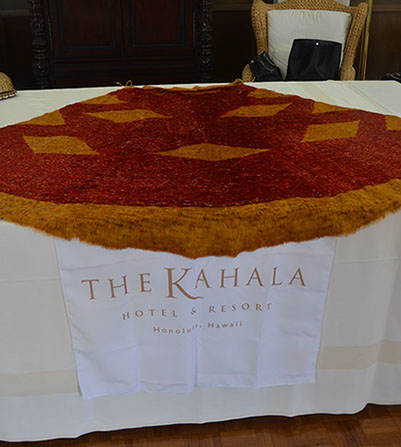
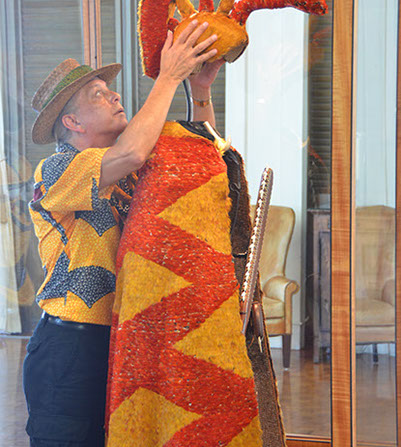
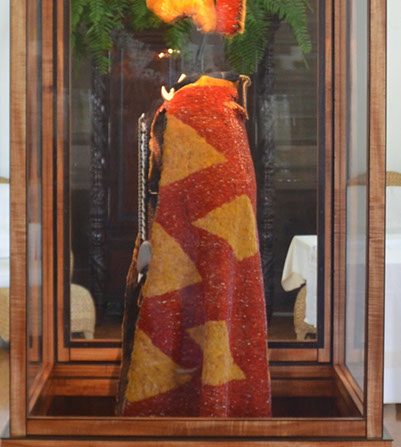
In 2014, Hawaiian Legacy Reforestation Initiative (HLRI) commissioned the second collection of featherwork art reproductions, a replica of the cape and helmet of Hawaiian High Chief Ke‘eaumoku Pāpa'iahiahi.
The collection was dedicated in a private ceremony and blessing at the Kahala Hotel & Resort on Oahu Island on September 23rd, 2015, where it will remain on permanent display.
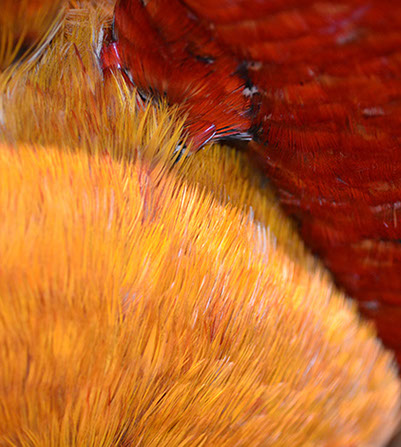
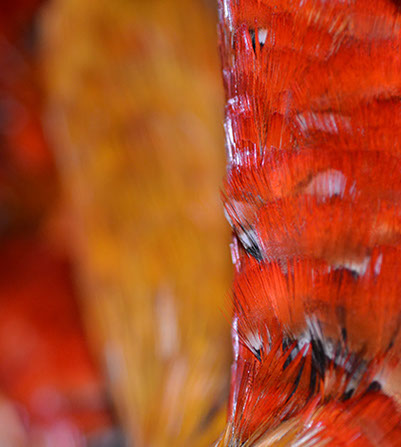
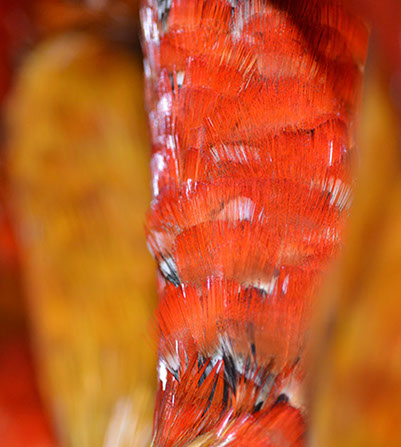
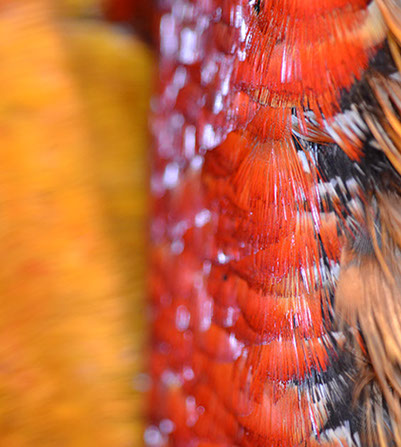
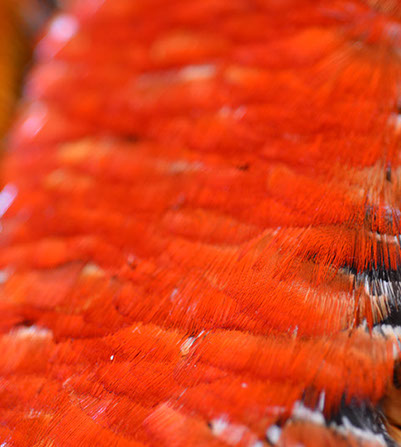
The cloak measures 60 inches in length and 108 inches in width at its base. It contains approximately 200,000 individual Lady Amherst Pheasant feathers
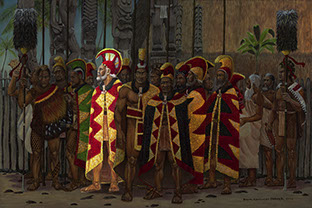
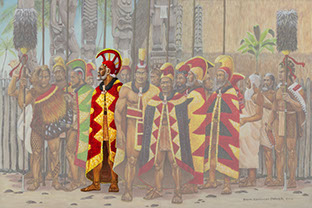
“The High Chief Ke‘eaumoku Pāpa‘iahiahi lived from 1736–1804 and was instrumental in helping King Kamehameha I ascend to the throne as Hawai'i’s first king, but no known featherwork pieces or depictions exist of his full cloak, so I spent months researching the design around the back that correlates with the front sections shown in Brook Kapukuniahi Parker’s painting,” said San Nicolas. “I sought advisement from experts at the Bernice Pauahi Bishop Museum in Honolulu when starting the collection. It is such an honor to work on this project, and it represents a critical continuation of Hawaiian featherwork.




<
>
See the ‘Ahu‘ula o Papaiahiahi on display at the Kahala Hotel & Resort

Witness the creation of the cloak in this time-lapse video
‘Ahu‘ula o Kekūhaupi‘o
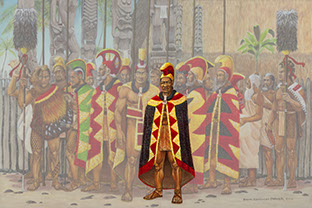
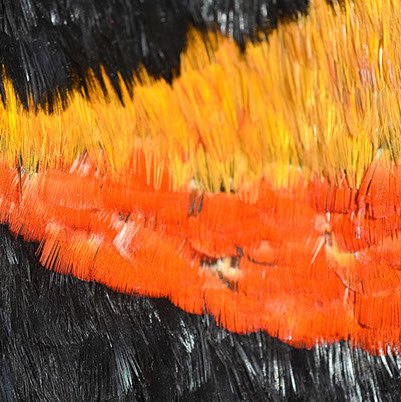
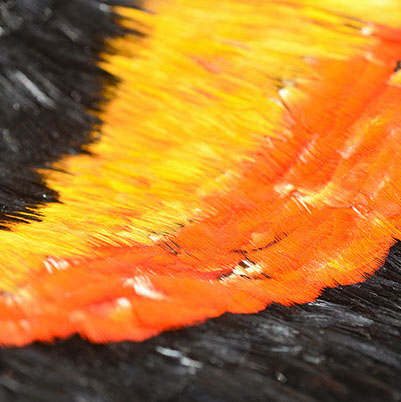
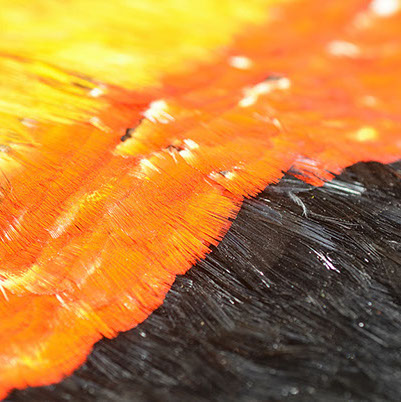
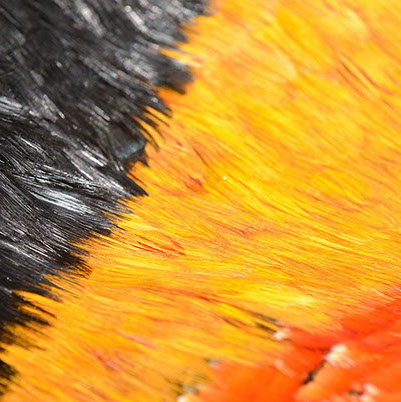
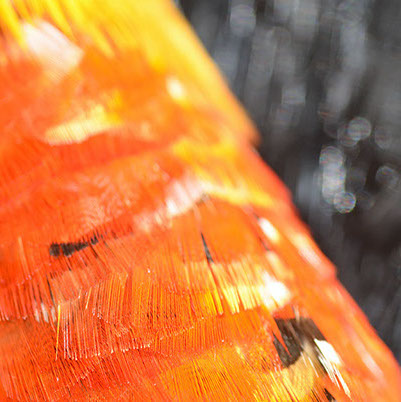
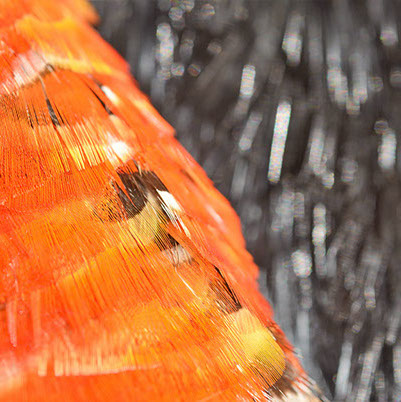
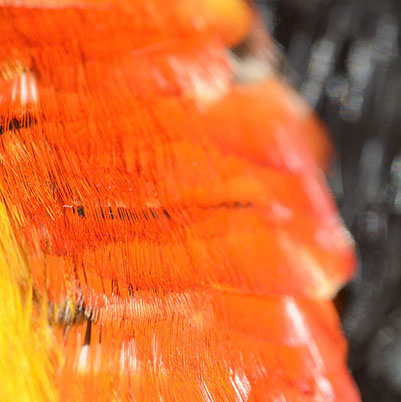
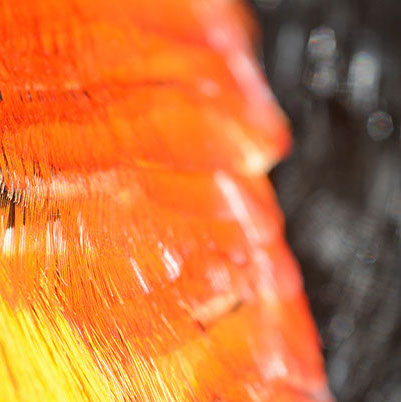
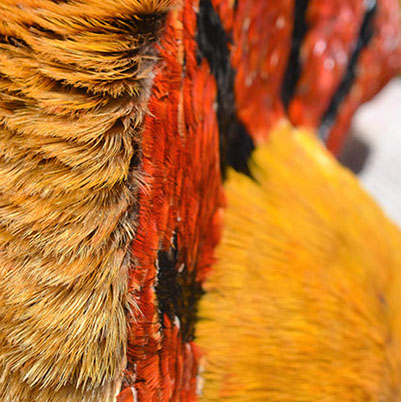
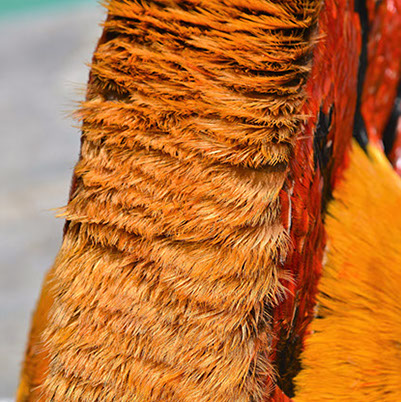
In 2016, Hawaiian Legacy Reforestation Initiative (HLRI) commissioned the third collection of featherwork art reproductions, a replica of the cape and helmet of Hawaiian High Chief Kekūhaupi‘o.
Kekūhaupi‘o was the senior advisor to Kamehameha. Of the five members of the Aha ‘Ula (the sacred red chord) or symbolically the royal chiefly council tied together by blood, Kekūhaupi‘o had the most influence on the life of the young Kamehameha. He was responsible for all the training of his young charge including military science, martial arts, use of weapons, genealogy, farming, fishing, and physical training.
Kekūhaupi‘o was a descendant of the royal Pi'ilani line of Maui through Lonohonuakini. This lineage made him an uncle to Kamehameha. Kekūhaupi‘o was by not tall, with very wide shoulders, large hands and long fingers. His grip was extremely strong and his moves were lightning quick. When he was young his military kumu (teacher) immediately saw his superb skills. He excelled in mea kana (fighting weapons), moa lawa (dart fists) and lua (bone breaking). He was so exceptional that he was given to another Kumu and lua instructor, Koa’ia for advanced training in this art After months of training he was judged to have amazing strength and training knowledge, yet he remained humble and respectful to his Kumu.
When Kekūhaupi‘o was ready for graduation, his Kumu realized that no human competition was equal for his ‘ailolo (graduation ceremony and accompanying rituals). Koa’ia knew that his most fierce competition could only come from fighting a Niuhi (a great shark with the terrifying eye). If successful, Kekūhaupi‘o would become a Niuhi in battle. The day for his supreme test started when he, Koa’ia and a party of warriors in a double canoe left shore and headed for deep waters. Bait was prepared and the putrid drips from the pork bundles were scattered to draw the great shark.
When the shark appeared the bundles were hung between the hulls from the pola (middle platform).While the shark was in a feeding frenzy Kekūhaupi‘o slipped into the water and with his mighty grasp hung onto the beast and began stabbing it with his ihe pokole (short spear dagger).





<
>
After a great length of time the shark weakened. Koa’ia directed some warriors to dive in and lasso the tail of the exhausted shark. It was pulled up onto the pola and Kekūhaupi‘o came aboard. He was given the right eyeball of the shark to swallow and the left eyeball was presented to Akua as part of the ‘ailolo ceremony. All those around him noticed the change come over Kekūhaupi‘o’s countenance and they knew that from that day forward he would be Niuhi.
Kamehameha participated alongside Kekūhaupi‘o in the wars between Kalaniopu'u and Kahekili. He established a reputation of bravery and strength in these wars with Maui. In 1776, during one of the many battles with Maui, Kekūhaupi‘o was wounded with one of two ihe spear thrown at him by a famous warrior from Maui, named Pua. The spear's barb broke off in the body of Kekūhaupi‘o and was irretrievable. The wound healed over but the barb remained lodged in his body the rest of his life.
See the ‘Ahu‘ula o Kekūhaupi‘o on display at the Hawai‘i Convention Center

Witness the creation of the cloak in this time-lapse video
'Ahu'ula O Kīwala'ō
In 2016 Hawaiian Legacy Reforestation Initiative commissioned the first collection of featherwork art reproductions; a cape, sash and helmet worn by High Chief Kīwala'ō.
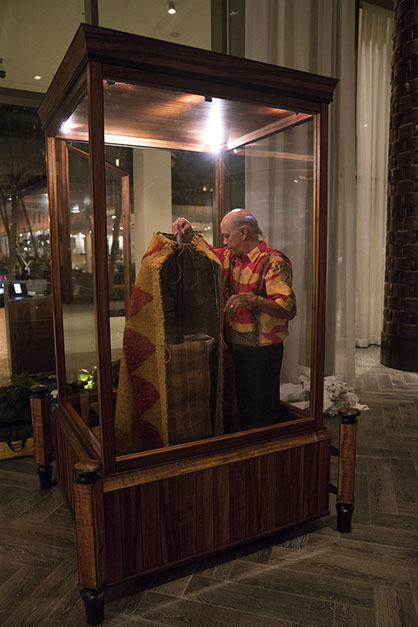
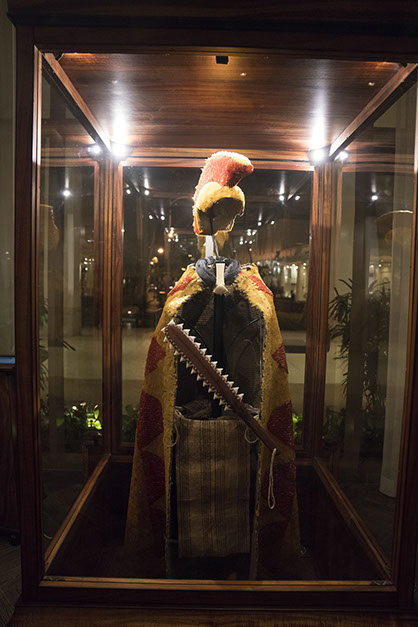
The pieces were dedicated in a private ceremony and blessing at the Alohilani Resort on Oahu Island, where they will remain on display in a custom created koa wood case by award winning wood artisan Alan Wilkinson.
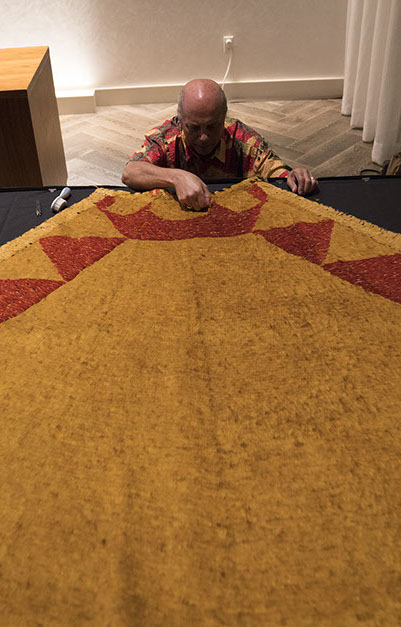
THE CLOAK OF KĪWALA‘Ō
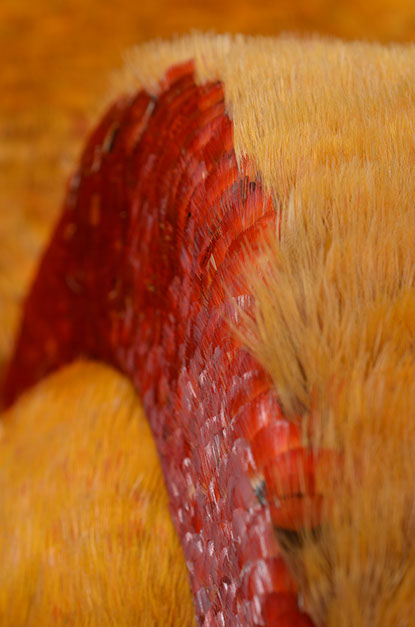
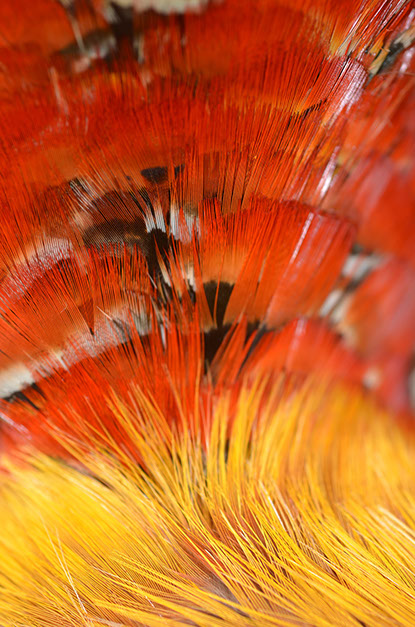
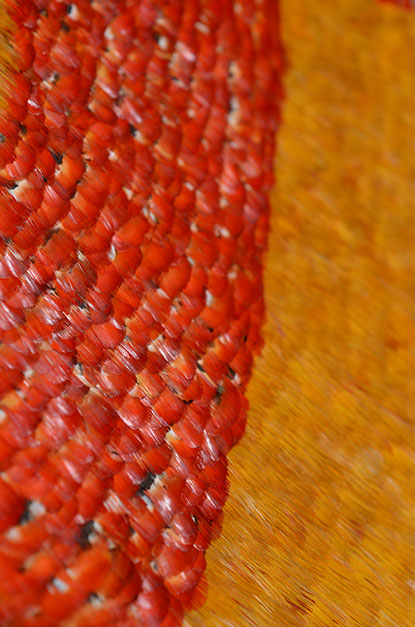
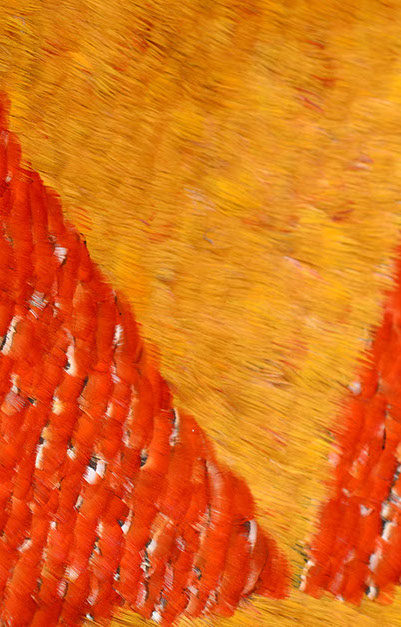
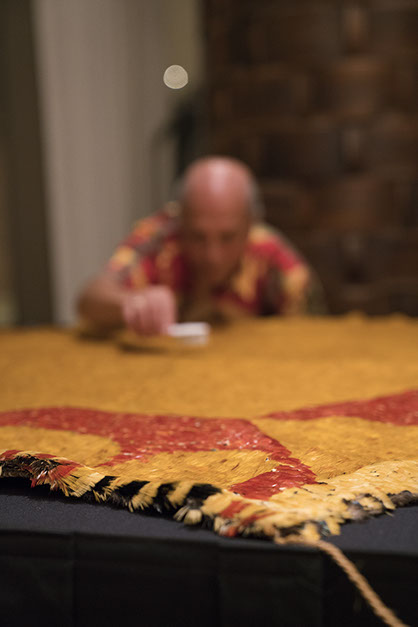
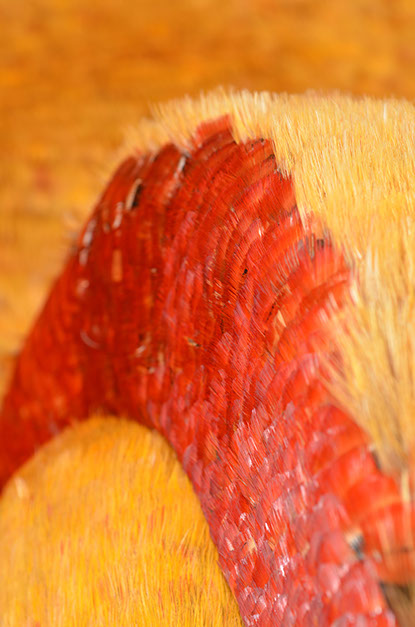
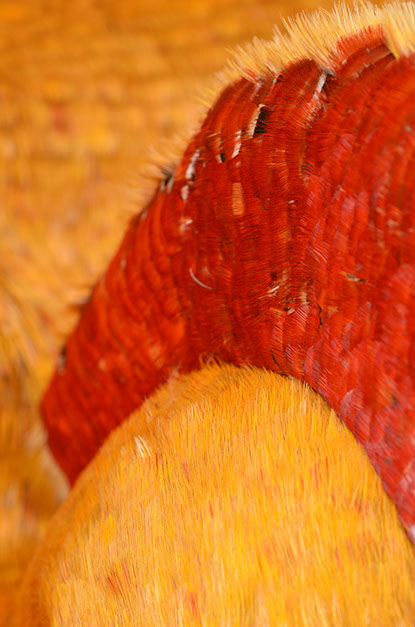
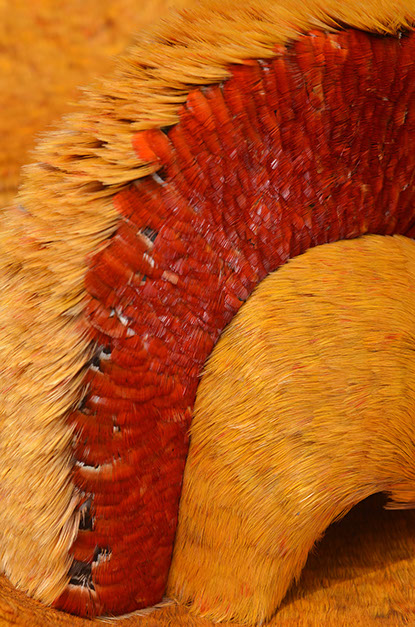
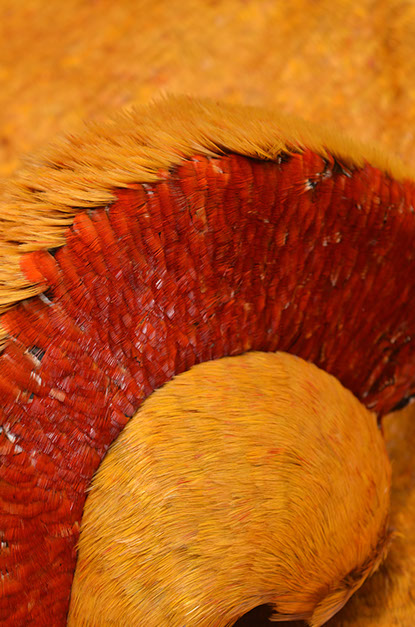
This magnificent cloak is the creation of renowned feather worker Rick San individual Chinese Golden Pheasant feathers (the equivalent of 685 birds) in addition to nearly 50,000 feathers from the Lady Amherst Pheasant (the equivalent of 1,700 birds). All feathers were ethically sourced as a bi-product of pheasants grown for food.
MAHIOLE
This stunning crescent-shaped helmet features an additional 42,000 feathers. Each piece is hand-woven, in keeping with traditional artisan methodologies from ancient Hawaiian history.
MALO
The malo is hand crafted clothing using traditional Hawaiian methods, natural dyes and kapa (from the bark of the wauke tree). A stamping pattern is created using the ‘ohe kāpala (handmade bamboo stamps).
PALAOA
The lei niho palaoa was only worn by men and women of chiefly rank. This lei palaoa is handmade with petrified walrus ivory (1.5 million years old) and fi nished with more than two miles of fine braided material (braided hair was used in ancient Hawaiian times).
NIHO LEI-O-MANO
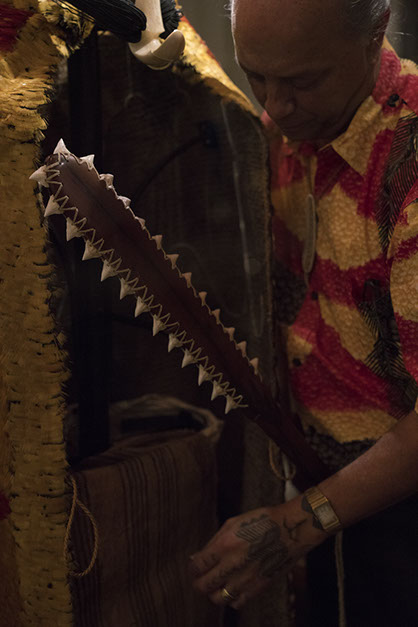
The literal translation is “lei of sharks teeth.” These weapons were reserved for the ali‘i nui (supreme rulers). It is made form endangered Hawaiian kauila wood, known as the “iron” of the forest for its strength. Handcrafted by Manuel Mattos.
HEIRLOOM KOA CASE
The stunning heirloom presentation case and matching podium were created by the award-winning master craftsman and wood artisan Alan Wilkinson. The case contains endemic curly koa, milo, East Indian rosewood, and pheasantwood from a tree found at
the home of Queen Lili‘uokalani, the last monarch of Hawai‘i.


<
>
See the ‘Ahu‘ula o Kīwala'ō on display at ‘Alohilani Resort

Watch the creation of the cloak
‘Alohilani Resort Grand Opening
Hawaiian Legacy Reforestation Initiative
PO Box 22435 Honolulu, HI 96823
info@legacytrees.org
Toll-Free:
1-844-REFOREST